Biodiversity loss is no longer just an environmental concern. A new national security assessment shows how ecosystem collapse threatens UK and global stability, and why urgent action on climate and nature matters.
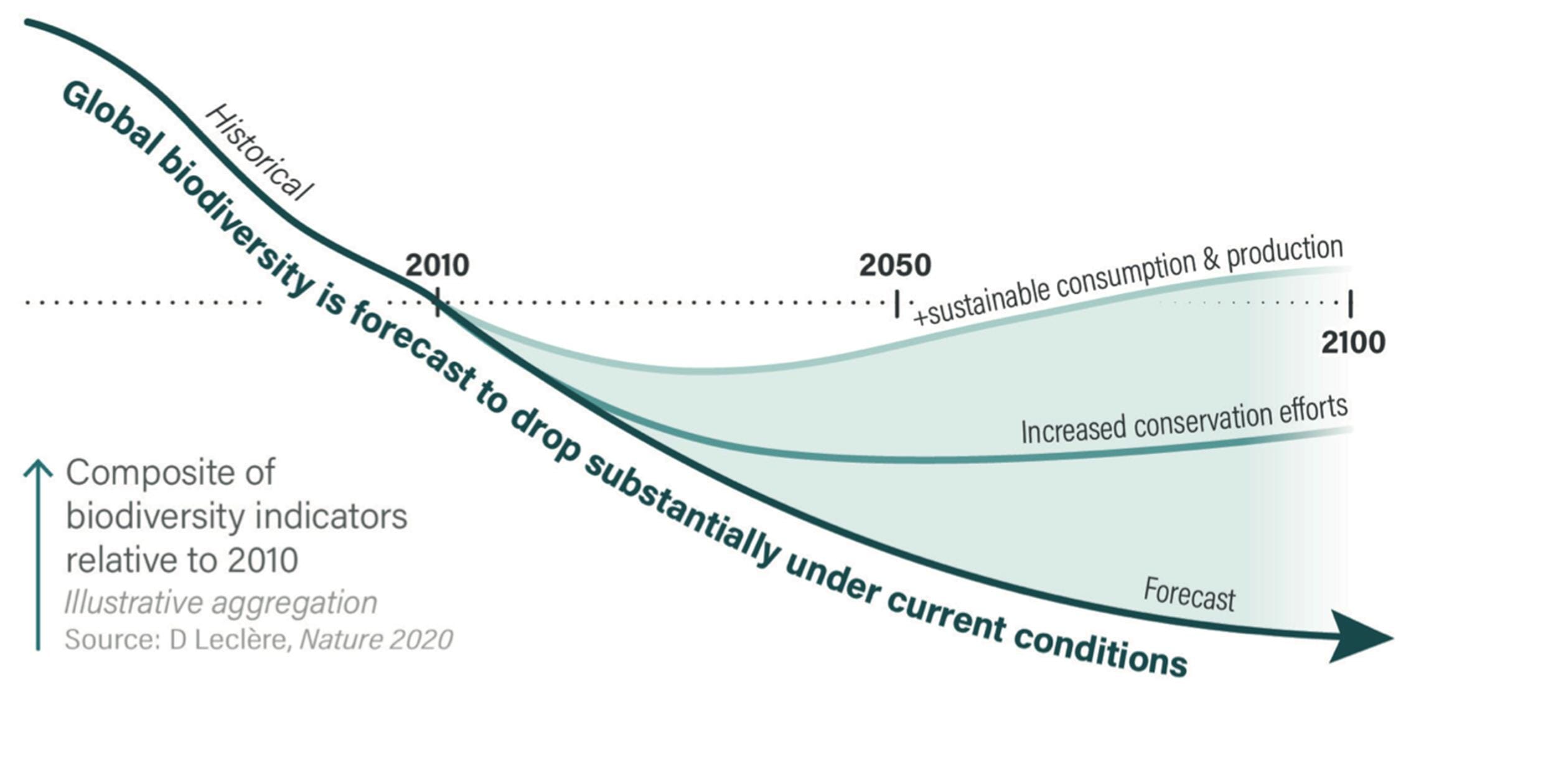
In January 2026, the Joint Intelligence Committee and DEFRA published a landmark National Security Assessment on global biodiversity loss and ecosystem collapse. Its central conclusion is clear: accelerating loss of nature is not only an environmental crisis, but a growing security risk for the UK.
The assessment finds, with high confidence, that ecosystem degradation is occurring across all regions and that every critical ecosystem is on a pathway towards collapse. If these trends continue, the impacts, including food and water insecurity, economic disruption, migration pressures and conflict, are likely to intensify through to 2050 and beyond.
Cascading Risks of Biodiversity Loss
A key contribution of the report is its focus on cascading risks. Biodiversity loss does not act in isolation: shocks to ecosystems propagate through food systems, supply chains, markets and political systems. The assessment identifies six regions of strategic ecological and socio-economic importance to the UK: the Amazon and Congo rainforests, boreal forests, the Himalayas and Southeast Asia’s coral reefs and mangroves. Ecosystem collapse in any of these regions could drive food price volatility, geopolitical competition for resources, and instability far beyond national borders through impacts such as reduced agricultural productivity and fisheries collapse, increased water scarcity and disaster risk, higher disease emergence, disrupted trade, and rising migration pressures.
Ed Hawkins, Professor at the University of Reading and Climate + Co-Centre Deputy Director, said:
“The most important implication of this assessment is that biodiversity loss has moved firmly into the realm of national security. It shows that ecosystem collapse can destabilise food systems, economies and geopolitics at a scale that governments can no longer afford to treat as a secondary issue.”
Managing global risk through local action and international cooperation
While the risks of biodiversity loss and ecosystem collapse are global, the assessment is clear that local and national action matters. Countries that invest in ecosystem protection, nature recovery and resilient food systems are better positioned to withstand future shocks. And protecting and restoring nature is consistently identified as cheaper, more reliable and less risky than attempting to replace lost ecosystem functions later.
At the same time, no country can manage these risks alone: international cooperation, including delivery of the Kunming–Montreal Global Biodiversity Framework, with its targets to protect and restore nature, and the Paris Agreement, with its commitment to net zero and limiting global warming, is essential to reduce shared vulnerabilities and prevent environmental shocks from escalating into geopolitical crises.
Understanding and managing these risks depends on robust science that connects climate, biodiversity, water, and human systems. This is where international research centres like the Climate + Co-Centre play a vital role in strengthening the evidence base needed for long-term resilience and security planning.