As part of ROI Science Week, the Co-Centre supported a series of three creative climate change workshops entitled “Climate Creation: Collage and Zines in a Changing World” in Bettystown Library.
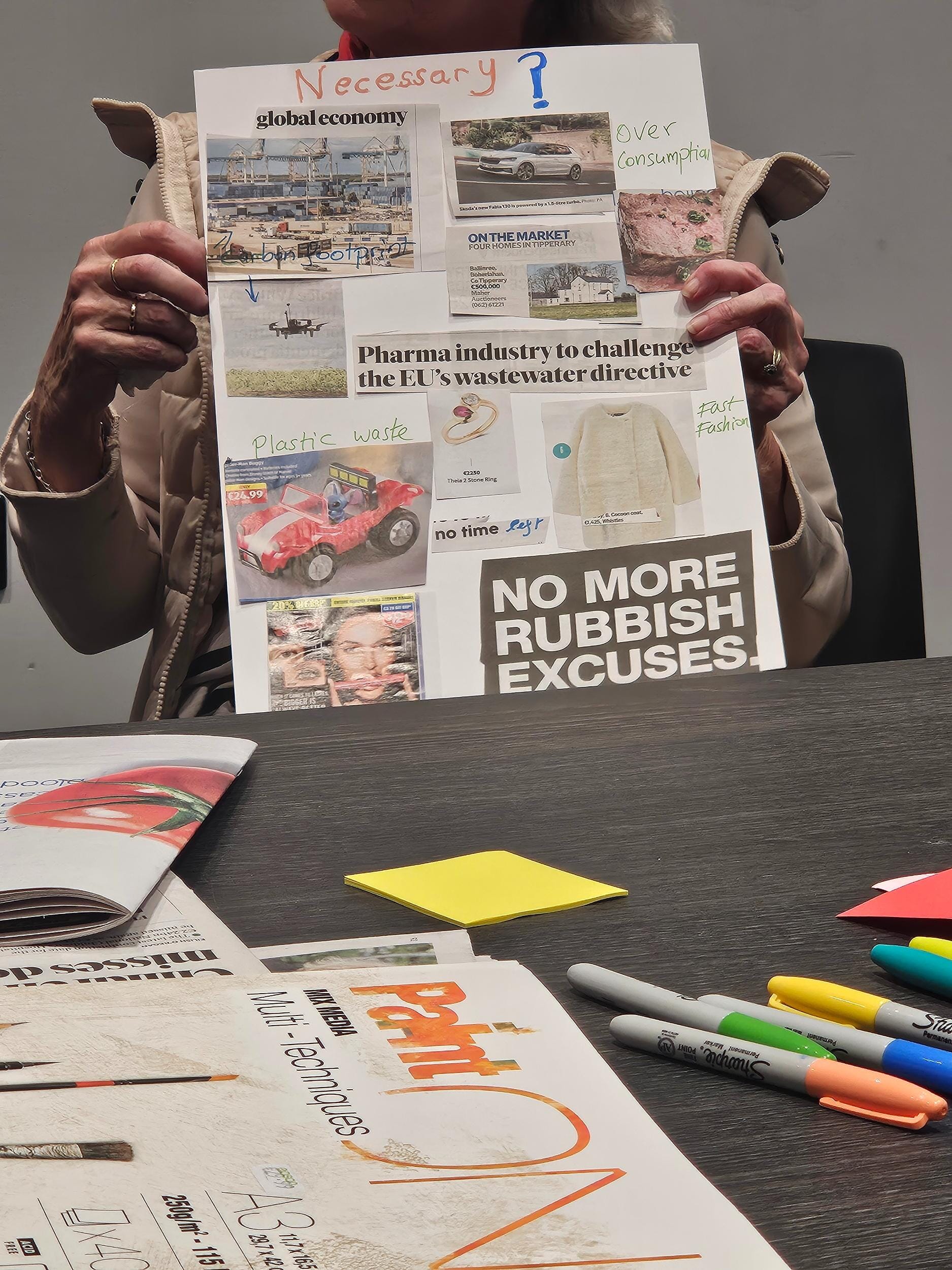
Climate change can feel like an abstract topic for many people. So much of the communication we encounter is preoccupied with figures, graphs, and mathematical models. For those who have not been directly exposed to its impacts, it isn’t always easy to connect with the material tangibly. For others, the complexity of climate change can lead to feelings of paralysis and overwhelm as they grapple with the multifaceted nature of the planetary crisis.
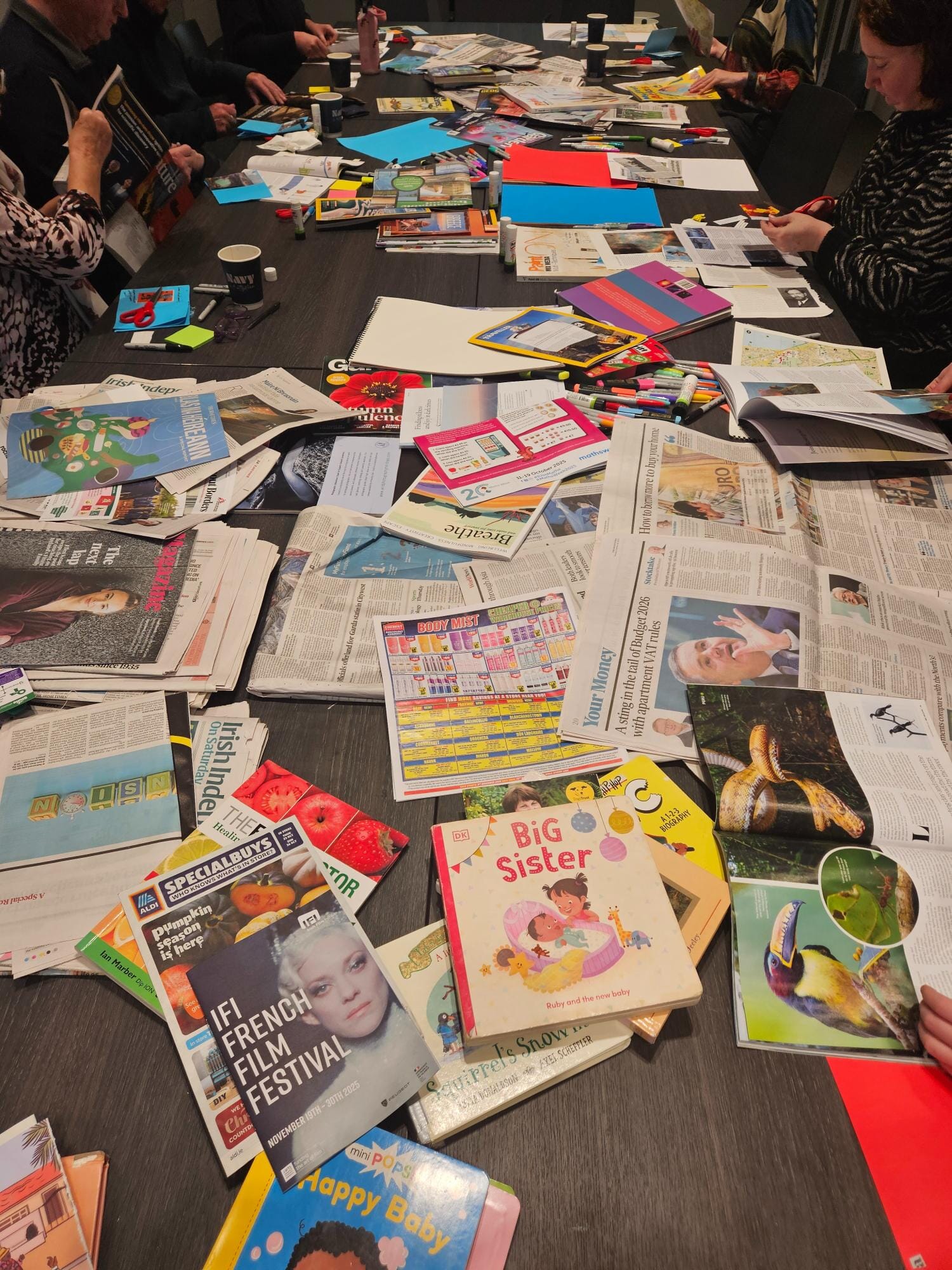
To address this, the Science Week workshops invited members of the public to engage with climate change on a personal and creative level through hands-on crafting activities. Together, participants transformed old newspapers, magazines, and damaged books from the library into collages and zines that reflected their experiences, emotions, and perspectives on climate change.
Dr Cormac Cleary, post-doctoral researcher at the Climate Co-centre and based at Dublin City University, explains the value of using creative practice:
“Collages allow the artist to take existing materials and recombine them into evocative new artworks. They don’t necessarily follow a strict logic and let the maker combine incompatible ideas and fragments together in unexpected ways – in this way they foreground the emotional and let our rational brains take a break.”
Zines, small, handmade magazines, support a similar approach. Many of the zines created in the workshops were purely visual pieces without linear trains of thought. While others developed structured stories and informational booklets on themes such as the circular economy.
Dr Cleary added:
“Both activities (zines and collages) can help people to work through their thoughts and feelings about climate change in different ways, whether that means making sense of difficult concepts in a more accessible format or channelling their climate anxiety into a productive and calming activity.”
Over the course of the week, 15 local participants attended the workshops. Each person created their own zine or collage and took part in conversations about their local environment – all within a beautiful space on the top floor of Bettystown Library, with floor-to-ceiling windows overlooking the sea.
Feedback was overwhelmingly positive. Participants described the workshops as offering them new ways to think about climate change, a safe space to share their thoughts, and a valuable feeling of community.
The workshops were designed and facilitated by Dr Cormac Cleary, a postdoctoral researcher at the Co-Centre based in Dublin City University (DCU), and Dr Ellen Howley, Assistant Professor of English at DCU and member of the university’s Institute for Climate and Society, with additional facilitation from Co-Centre colleagues at DCU, Trinity College Dublin, and Queen’s University Belfast.
The workshops were generously supported by Research Ireland and the Co-Centre for Climate, Biodiversity and Water.