Jamie Hannaford, Principal Hydrologist at the UK Centre for Ecology & Hydrology (UKCEH) and Climate+ Co-Centre Principal Investigator, gave expert evidence to the House of Lords Environment and Climate Change Committee on 12 November 2025, as part of its inquiry into how England can better prepare for future droughts.
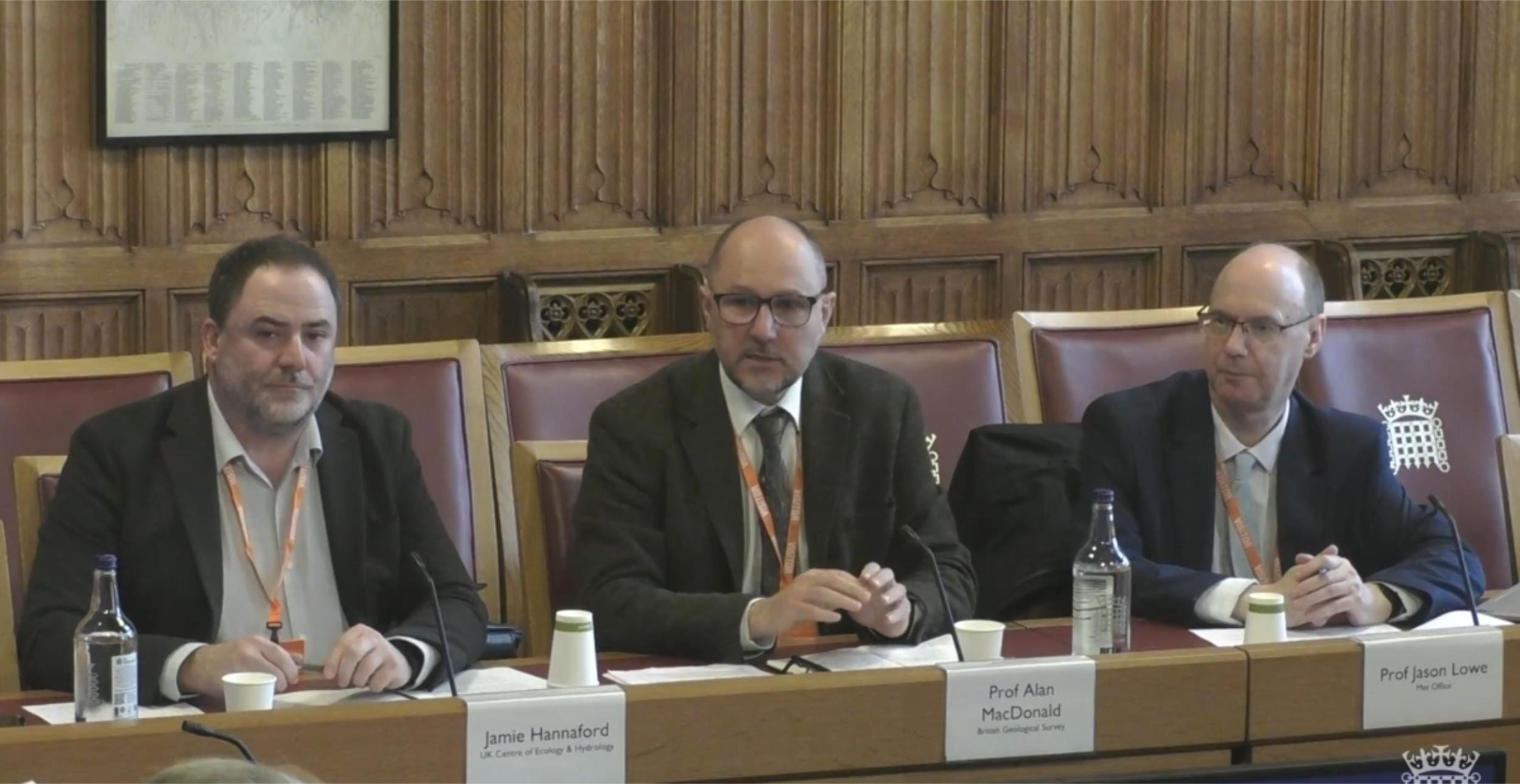
Appearing alongside experts from the Met Office and the British Geological Survey, he highlighted the need for science-led planning, strong collaboration and clear public communication.
Key points raised by Jamie:
- The UK benefits from internationally high-quality, long-term records of rainfall, river flows and groundwater, but continued investment in monitoring is essential. – “You can only manage what you measure.”
- Better data is needed on the social and environmental impacts of drought to guide effective mitigation and future planning.
- The UK Water Resources Portal, co-developed with multiple stakeholders, provides rapid, local-scale information to support decision-making and improve public access to data.
- Technological advances, including hydrological modelling and satellite observations, are improving monitoring, but significant spatial data gaps remain.
Why this matters:
Future projections show that hotter, drier summers will increase the severity of hydrological droughts between April and September, leading to more rapid-onset “flash droughts” affecting soil moisture and river flows. While climate models generally suggest wetter winters, creating lower confidence in predictions of long, multi-year droughts, climate variability means runs of dry winters will still occur. The most serious water management challenges will arise when dry winters coincide with hot, dry summers.
This uncertainty makes long-term planning particularly difficult for water managers and underlines the need for resilient infrastructure and robust data. Especially to support the local communities that feel the impacts of droughts long before an official declaration. Through the Co-Centre programme, UKCEH and its collaborators, working closely with the water industry, are developing new methods to understand and adapt to droughts across the British and Irish Isles.
Jamie Hannaford said:
“Droughts are often less visible than floods, but their impacts can be just as far-reaching. Climate change is increasing the risk of droughts, and that means we need continued investment in monitoring, forecasting and evidence-based planning. By improving resilience now, we can better protect water supplies, people, and the environment.”
What happens next?
In addition to the oral evidence provided, Climate + Co-Centre colleagues from UKCEH submitted written evidence to the committee. The committee will draw on both the written and oral evidence to develop recommendations for government on improving drought preparedness.