From tiger mosquitoes in European cities to grey squirrels in Irish forests, invasive species are reshaping environments faster than we can respond. Here Dr Ross Cuthbert tells us why climate change is compounding the problem.
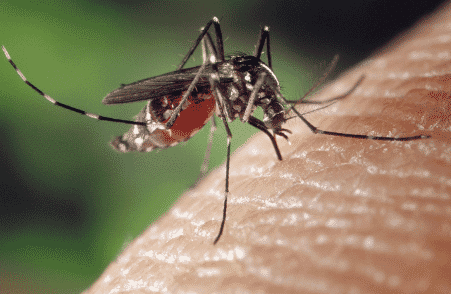
(C) Asian tiger mosquito (Aedes albopictus), Source: Pixabay
When mosquitoes arrive
In water-holding containers across Europe, a small black-and-white striped mosquito is breeding in unprecedented numbers. The Asian tiger mosquito (Aedes albopictus), native to the forests of Southeast Asia, has spread across much of the European continent on the back of global trade and a warming climate, and with it, is bringing the risk of diseases once confined to the tropics.
The Asian tiger mosquito is just one example of a much larger problem.
Biological invasions, the human-driven movement of species beyond their natural ranges, are among the leading causes of biodiversity loss and environmental degradation worldwide, and have contributed to 60% of documented extinctions. By displacing native species, altering habitats, and disrupting food webs, so-called ‘invasive species’ can fundamentally reshape the ecosystems we depend on.
The socio-economic toll of invasions is alarming. Recent research from Queen’s University Belfast found that invasive species have caused more than $1 trillion in economic damages in recent decades, with costs continuing to rise as invasions become more frequent. Some of the most damaging invaders reduce production from farms, forests, and fisheries, while others damage infrastructure or spread infectious diseases that generate major healthcare costs.
Mosquitoes are among the costliest invaders of all. Since the 1970s, invasive mosquitoes alone are estimated to have caused at least $95 billion in global economic impacts. Another mosquito invasion, by the Asian malaria mosquito Anopheles stephensi, is sweeping across parts of Africa and bringing unforeseen malaria outbreaks in its urban areas, compounding disease control challenges.
Climate change and invasions: a dangerous interaction
Climate change is making biological invasions worse. Many invaders thrive in warmer conditions, and rising temperatures increase their survival, reproduction, and spread. The scale of interaction between climate change and biological invasions is still being worked out, but the direction of travel is clear: global warming is accelerating invasion rates and intensifying their impacts.
Cold-blooded organisms such as invasive insects benefit most directly from climate warming. As temperatures rise, they reproduce faster, disperse further, and cause greater ecological and economic damage. Native species, meanwhile, are often pushed closer to their physiological limits under climate stress, leaving them less able to compete with incoming invaders. The result is ecosystems that are increasingly susceptible to invasion.
Mosquitoes and other vectors are already living this out. Warmer conditions across temperate regions are allowing species such as the tiger mosquito to reproduce faster and expand across Europe, increasing the risk of mosquito-borne disease outbreaks in areas that were previously too cold for transmission.
A call for proactive management
Preventing invasions is far cheaper than trying to control them after. Once an invader is established, eradication is difficult and often impossible; the costs keep accruing for decades. Acting early, at the border, or in the first months after a new species is detected, could save trillions of dollars in future damages.
Despite this, invasive species management is mostly reactive. Control efforts are typically delayed until an invader is already widespread, by which point removal becomes extremely difficult and expensive.
Better biosecurity and surveillance are the foundations of a proactive response, alongside investment in rapid-response teams that can act on new detections before they spread. The public has a part to play too: citizen science platforms now allow anyone with a smartphone to report unfamiliar species, and many of the most successful early interventions have started with a single sighting from a member of the public.
The Asian tiger mosquito continues to expand across Europe and globally. What happens next, whether it establishes in the UK and Ireland, and whether the diseases it carries follow it north, depends on choices made now: in biosecurity at the border, in surveillance in local habitats, and in the research that connects climate and invasion science.
Spotted a mosquito? Report it
Queen’s recently launched the MosquitoNI project to better understand mosquitoes and associated viruses in a Northern Irish context, and to assess how mosquito-borne risks will shift as the climate continues to change. The project depends on public reports to track which species are resident, where, and when.
If you spot a mosquito in Northern Ireland, photograph it and submit it through the MosquitoNI website.