The Irish Government is proposing significant changes to the cost regime governing environmental judicial reviews.
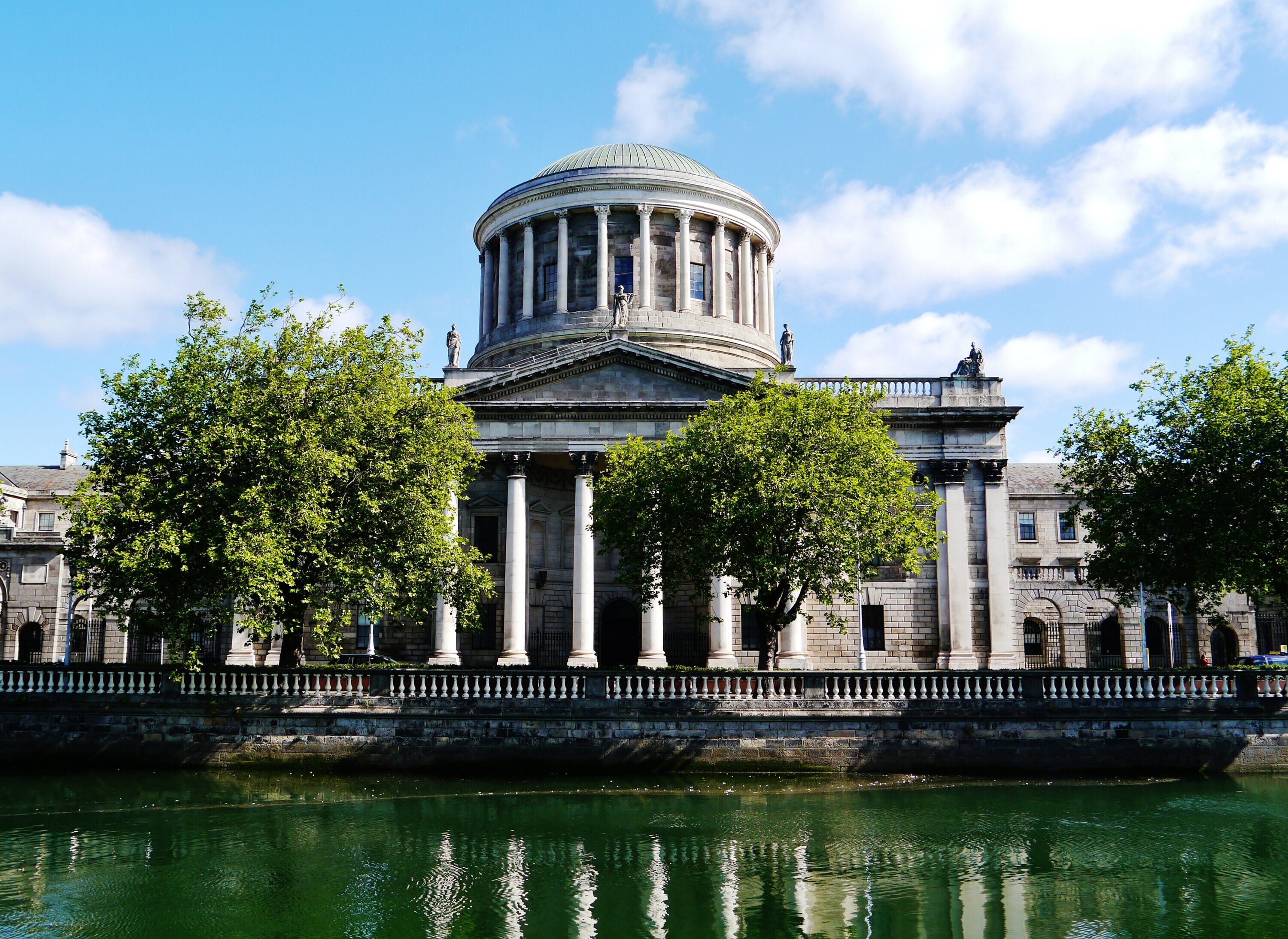
Judicial review allows courts to assess whether public authorities have acted lawfully when making decisions. Although courts do not reconsider the merits of a decision, judicial review has become one of the most important tools for enforcing environmental law in Ireland and ensuring accountability in public decision-making.
The reforms have also prompted questions about Ireland’s obligations under the Aarhus Convention, which guarantees access to environmental justice and requires that environmental litigation not be “prohibitively expensive”. An Taisce and the Environmental Law and Justice Group UCD have argued that reducing cost recovery while simultaneously considering restrictions on conditional fee arrangements risks undermining that principle.
The proposed reforms arise under the Planning and Development Act 2024. Under the previous framework, developed to comply with the Aarhus Convention and EU law, environmental litigation was designed not to be prohibitively expensive. Applicants generally did not face the risk of paying the other side’s costs if they lost, while successful applicants could recover some or all of their legal costs. This system made it possible for many individuals and NGOs to secure legal representation through conditional fee (“no win, no fee”) arrangements.
The new regime would retain the principle that parties generally bear their own costs, but would cap the amount a successful applicant can recover at government-set levels. According to the consultation report underpinning the proposals, the standard cap is expected to be significantly lower than the average legal costs previously recovered by successful applicants.
Critics of the changes argue that this may discourage lawyers from taking environmental cases, making it more difficult for individuals and NGOs to obtain representation. Although the Act also introduces a legal aid mechanism, it will be means-tested and its practical operation, as well as the exact details of the new regulations, remain unclear.
While ministers argue the reforms will bring greater certainty and efficiency to planning and development, environmental groups including An Taisce and the Irish Wildlife Trust, alongside legal scholars such as Dr Orla Kelleher, warn that they could make it harder for citizens and NGOs to challenge unlawful decisions.
Environmental judicial reviews have played a major role in shaping environmental governance. In Friends of the Irish Environment v Government of Ireland (2020), the Supreme Court quashed the Government’s National Mitigation Plan 2017. More recently, in Coolglass v An Bord Pleanála (2025), the High Court emphasised that planning authorities must exercise their powers consistently with Ireland’s climate objectives where possible. These cases show what judicial review does beyond resolving individual disputes. They clarify legal obligations and sharpen environmental decision-making.
Supporters of reform often contend that judicial reviews delay housing and infrastructure projects. Yet environmental judicial reviews remain rare, accounting for only a small fraction of planning permissions. Planning experts instead point to under-resourced planning authorities, poor decision-making and court delays as the principal causes of inefficiency.
The debate is therefore about more than legal costs. It raises a fundamental question: how accessible will environmental justice remain in Ireland for citizens seeking to hold public authorities accountable?
Whether these reforms proceed as drafted will shape how meaningfully citizens and NGOs can challenge environmental decisions in Ireland. Cost rules are technical, but their effect is not: they determine who can afford to go to court, and therefore whose objections carry legal weight. A regime that prices ordinary applicants out of judicial review weakens the accountability that Ireland’s climate and environmental commitments depend on.
Author
Maisie McDavid, PhD student, Dublin City University