Professor Hayley Fowler shares the Climate Change Committee’s new report on preparing the UK for heat, flooding and drought, and what it means for all of us.
Across the UK we are already experiencing the impacts of climate change through extreme heatwaves, heavier rainfall and growing pressure on water resources. These impacts are affecting our health, homes, businesses, infrastructure, and natural environment.
That is why the Climate Change Committee recently published A Well-Adapted UK, our first dedicated report focused on solutions. Published as part of our independent advice for the UK’s Fourth Climate Change Risk Assessment, the report sets out a practical and achievable package of measures to build a safer, healthier and more resilient UK.
Our analysis identifies three major risks that threaten our way of life – heat, flooding and drought.
Without further action, these risks will continue to grow. By 2050, up to 92% of homes could face overheating, peak river flows could increase by as much as 45%, and water supply shortfalls could exceed five billion litres per day.
The good news is we know what needs to be done. The report highlights eight priority areas for government action.
Eight priorities for UK climate adaptation
- Protect people from extreme heat by improving cooling in critical settings such as hospitals, schools and care homes, and introducing a national maximum workplace temperature.
- Manage flood risk through greater investment in flood defences and nature-based solutions such as wetlands, while ensuring new development is resilient to future flooding.
- Avoid water shortages by developing new reservoirs, reducing leakage and improving the movement of water across regions.
- Support nature to adapt through increased investment in habitat restoration and regulation that reflects future climate conditions.
- Keep farming viable by helping farmers build resilience through measures such as crop diversification and on-farm water storage.
- Strengthen food security by improving understanding of climate risks across the food system and enhancing reporting by major food businesses.
- Maintain access to insurance by ensuring climate risks remain insurable and affordable, with clarity on the future of flood reinsurance arrangements.
- Adapt critical infrastructure to avoid cascading disruption so transport, energy and communications systems can continue to operate reliably during extreme weather.
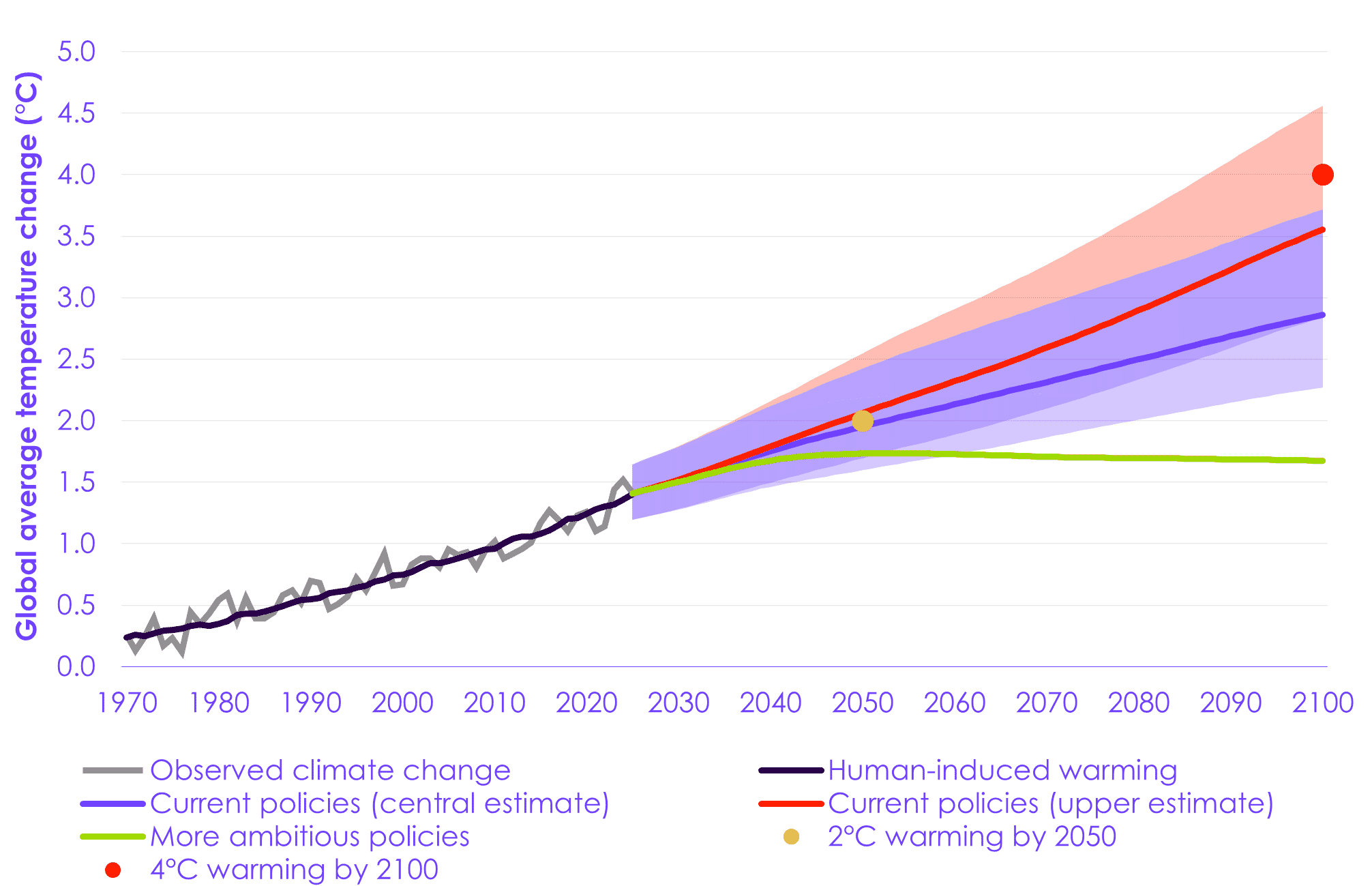
The report also sets out the economic case for action. We estimate that delivering these measures would cost around £11 billion per year – equivalent to around 2% of annual UK investment. By contrast, failing to adapt could see climate related damages rise to between 1% and 5% of UK GDP by 2050, equivalent to £60–£260 billion each year under a 2°C warming scenario.
We must also continue to reduce emissions as quickly as possible. But adaptation and mitigation go hand in hand. One reduces future warming; the other reduces harm from the warming we cannot avoid.
If you remember just one thing from the report it should be this – adapting to climate change is no longer optional. We know the risks, we know the solutions, and the costs of action are far lower than the costs of inaction. The challenge now is to turn that knowledge into action.
Read the full report: https://www.theccc.org.uk/publication/a-well-adapted-uk/