James Devenney, Peatlands Restoration Manager at Ulster Wildlife, tells us about their latest collaborative project with the Ulster Farmers Union
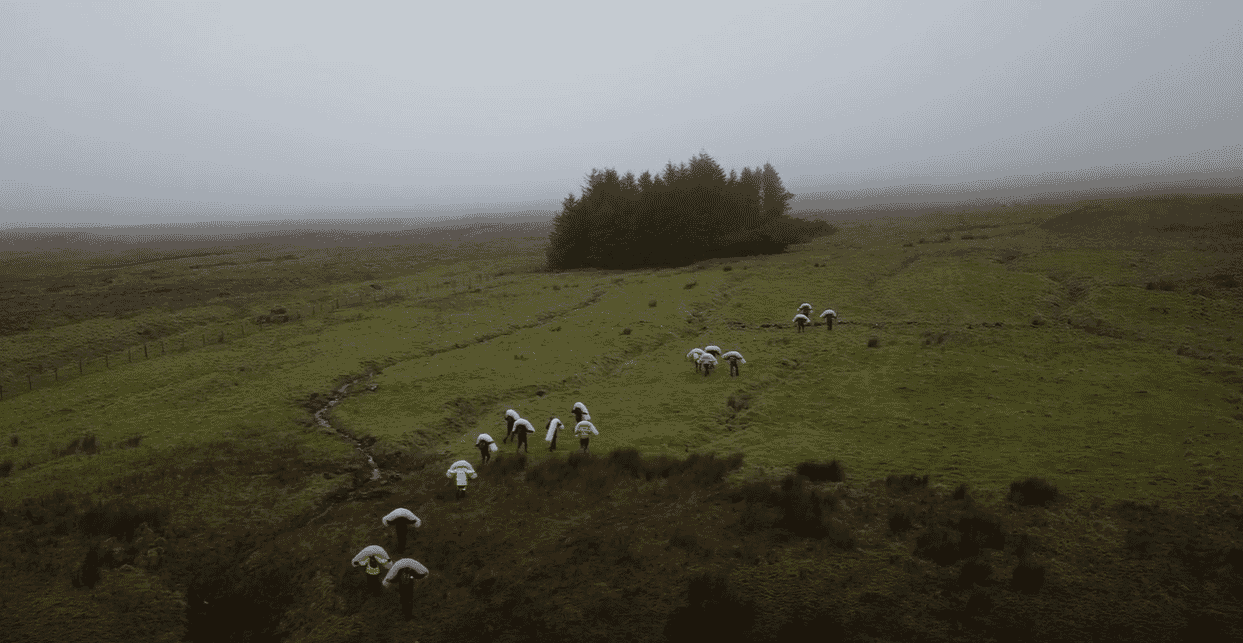
What is one of Northern Ireland’s most familiar farming products could help restore one of our most important natural habitats?
That was the question behind a recent peatland restoration trial in the Antrim Hills, where Ulster Wildlife and the Ulster Farmers’ Union set out to test whether locally sourced wool could play a role in tackling peat erosion.
Healthy peatlands are one of our most valuable natural assets. They store vast amounts of carbon, help improve water quality, reduce flood risk and provide habitat for some of our most endangered birds and wildlife, including breeding hen harrier and merlin in the Antrim Hills. But when peatland habitat becomes damaged and begins to erode, these benefits are lost. Bare peat is vulnerable to heavy rainfall, with water carving channels through the landscape and carrying peat downstream, degrading the habitat that these species depend on.
For years peatland restoration projects have relied on coir, made from coconut fibre, to slow water flow, trap sediment and encourage vegetation to re-establish. Although coir has proven to be an effective restoration material, it is imported. Our latest trial asked whether Northern Irish wool could offer a sustainable, locally sourced alternative.
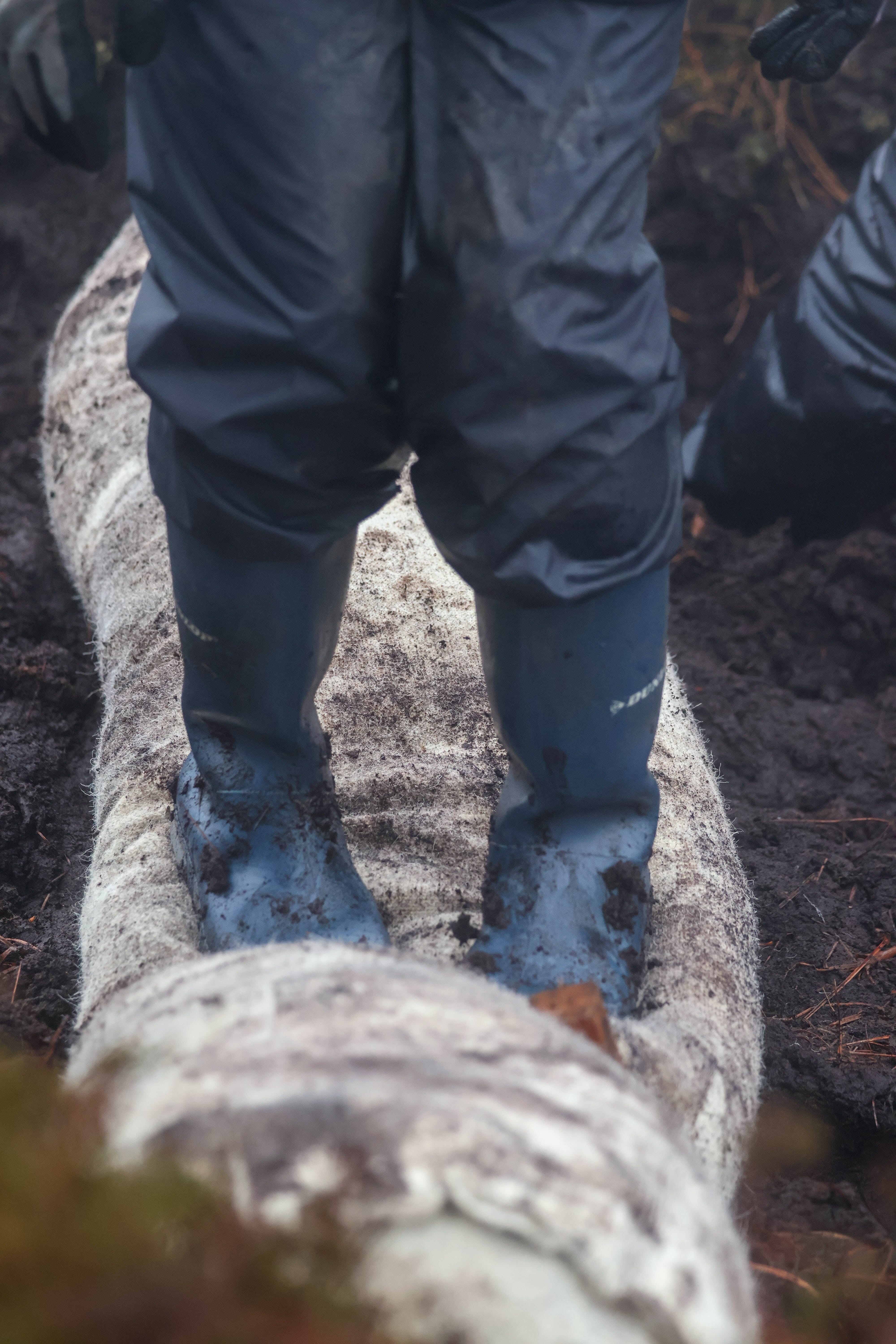
Local fleece was packed into woven wool tubes to create dense “wool logs”. In total, 60 wool logs were produced for the trial.
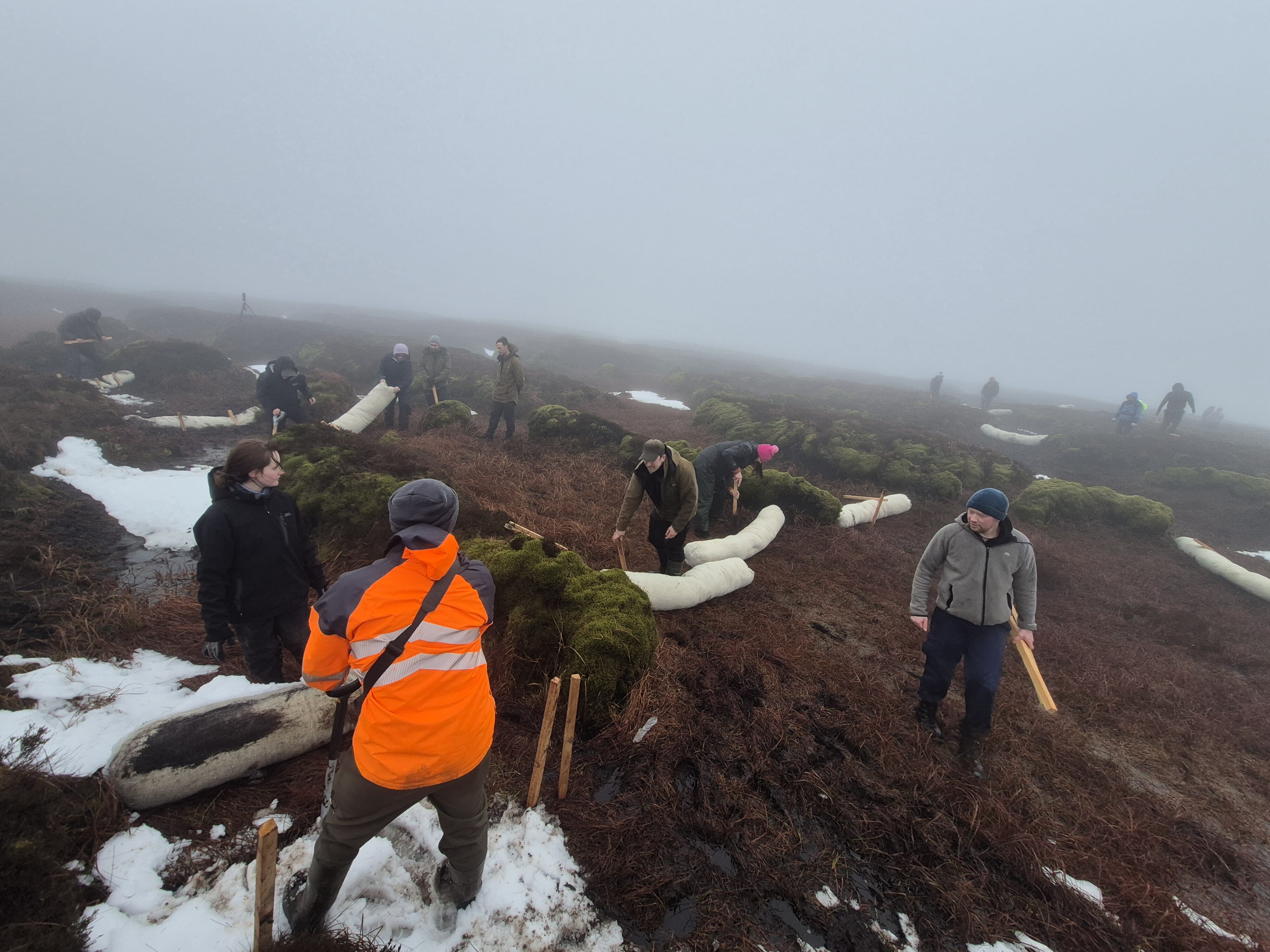
The trial took place on Slievenanee Mountain in the Antrim Hills, where Ulster Wildlife led a volunteer installation day to put the wool logs to the test. The mountain’s summit is affected by extensive areas of actively eroding bare peat. With large-scale peatland restoration planned for the site in coming years, Slievenanee presented the perfect opportunity to trial this new approach in advance of wider restoration works. By installing the wool logs across active erosion features now, we hope to better understand how they compare with the imported coir logs we have successfully used on other restoration projects.
In February, around 30 volunteers gave up their Saturday to help carry the wool logs up the mountain and into position. It was a true upland experience, with snow still lying on the summit as the team installed the logs across targeted erosion features. Volunteers came from across the community, including local landowners, farmers, staff from environmental organisations and members of the public, all keen to play a part in restoring this special landscape.
.JPG)
The wool logs were positioned to intercept overland water flow, helping to slow runoff, trap sediment and stabilise exposed peat. Over time, this creates more favourable conditions for vegetation to establish naturally, reducing further erosion and helping the peatland begin its journey to recovery.
One of the first things we noticed was how much lighter the wool logs were than traditional coir logs. This made them far easier to transport across challenging terrain and install by hand. This is no small advantage when restoration sites are often located in remote upland areas. Of course, the lighter weight may also influence how the logs perform during periods of heavy rainfall, which is exactly what this trial aims to investigate.
Beyond testing new restoration material, the project was also about bringing together the farming and conservation communities. Working alongside Ulster Farmers’ Union and local farmers created an opportunity to demonstrate how an underutilised local product could contribute to peatland restoration.
Northern Ireland produces high-quality wool, but most of it has relatively little commercial value. Exploring practical, nature-based uses for this resource could help create additional value while reducing reliance on imported materials.
Monitoring is now underway to assess how effectively the wool logs perform over the coming months and years. The findings will help determine whether wool could become a viable restoration material on a larger scale.
This trial has demonstrated the value of collaboration. By bringing together farmers, conservation organisations, local businesses and volunteers, it has shown how local knowledge and local materials can help shape innovative approaches to restoring our peatlands. As monitoring continues over the coming years, we’ll be watching to see whether Northern Irish wool can become another valuable tool in peatland restoration.
Guest Author Statement
This article was written by a guest contributor. This content is intended to encourage discussion and knowledge sharing within and across fields. The views and opinions expressed are those of the author and do not necessarily reflect the views of the Co-Centre for Climate + Biodiversity + Water.