PhD student at Trinity College Dublin, Hazel Craven uses more than a decade of citizen science data to find out.
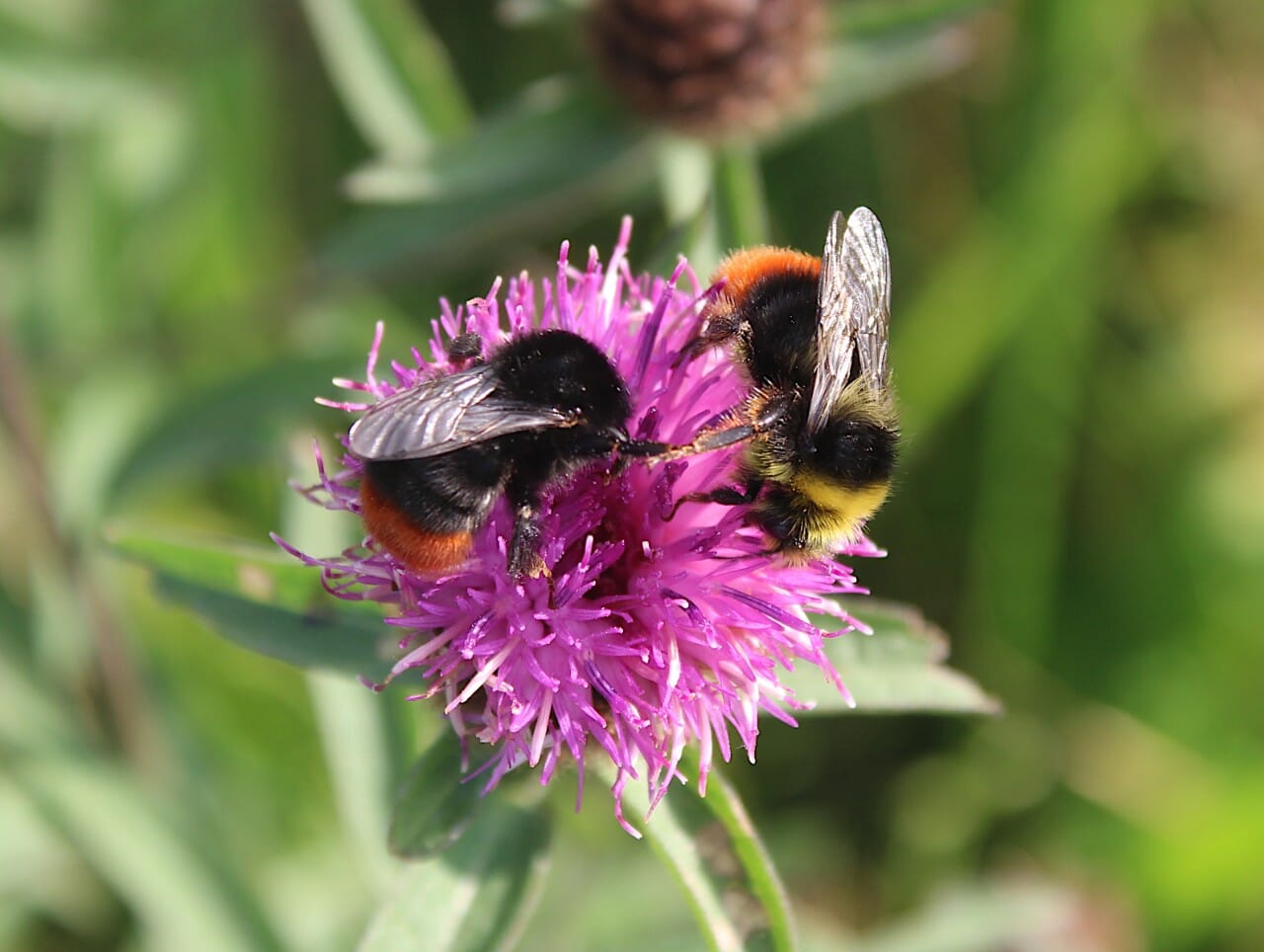
(C) Red-tailed Bumblebee (Bombus lapidarius) by Owen Beckett
It sounds like a simple question. Walk into an Irish garden in June and you might spot a buff-tailed bumblebee moving through lavender, or a common carder bumblebee buzzing over a hedgerow. But scale that question up to a whole country, ask whether there are more or fewer bumblebees than ten years ago, and “counting bees” becomes much more complicated.
A decade of data
Since 2012, dedicated volunteers with the All-Ireland Bumblebee Monitoring Scheme have been helping to answer that question. Month after month, they walk fixed routes, recording the bumblebees they see and the species they belong to. Coordinated by the National Biodiversity Data Centre, the scheme has built up more than a decade of data and is now one of our best windows into how Ireland’s bumblebees are faring.
My PhD research uses this dataset to ask what the bees are telling us. How are bumblebee populations changing across Ireland? When we say a species is declining or stable, how confident can we be in that conclusion? And where might monitoring need to be strengthened?
A sobering picture, but not a simple one
Early findings suggest that the picture is sobering, but not simple. At a community level, Ireland’s more commonly monitored bumblebee species show evidence of decline. However, individual species are not all changing in the same way. Some appear relatively stable, while others show much steeper losses. One species of particular concern is the Large Carder Bee (Bombus muscorum), which has shown significant declines over the study period.
This unevenness matters. Pollinator decline is not just about having fewer bees overall; it is about which species are declining, which habitats still support them, and which parts of the bumblebee community are most vulnerable.
Why long-term monitoring matters
Long-term monitoring is what allows us to see this. One survey can tell us which bees were active on a particular day, but repeated surveys across the same routes can reveal whether populations are changing over time. That is why the volunteers behind the All-Ireland Bumblebee Monitoring Scheme are so important: their records turn individual sightings into evidence of national change.
Interpreting that evidence is the next challenge. Bumblebees are strongly affected by seasonality, weather, and the availability of flowers. Rare species may only appear in a small number of surveys, so it can be difficult to know whether an apparent decline reflects real change or limited data. My research asks how confident we can be in the trends we detect, and how monitoring can be strengthened for the future.
From records to policy
That matters because monitoring is increasingly tied to policy. The EU Nature Restoration Regulation requires Member States to reverse pollinator decline by 2030, supported by standardised monitoring across pollinator groups. As Ireland works to restore habitats and strengthen pollinator monitoring, I hope my research can help turn years of careful recording into clearer evidence for action. The aim is simple, even if the statistics are not: to understand how Ireland’s bumblebees are changing, and to detect those changes clearly enough to respond.
Get involved
Want to help? The All-Ireland Bumblebee Monitoring Scheme welcomes volunteers year-round!
.jpg)
(C) Volunteer bee recorders captured by L. Lysaght